Bad Laws, Good Dogs: Why Breed-Specific Legislation Is Failing American Communities — and What's Actually Working Instead
A Law Built on a Feeling
In 1989, Denver became one of the first major US cities to ban pit bulls outright. The ordinance was passed in the wake of a high-profile attack, under enormous public pressure, with essentially no supporting research. It felt decisive. It felt like doing something.
Thirty-five years later, Denver's pit bull ban has been repealed, reinstated, challenged in court, and repealed again — a messy, expensive legal saga that never once produced evidence it made the city's residents meaningfully safer. Meanwhile, thousands of dogs were seized and euthanized, and families who'd done nothing wrong lost pets they loved.
Denver's story isn't unique. It's the story of breed-specific legislation (BSL) across America: well-intentioned, politically convenient, and almost entirely ineffective.
What BSL Actually Does — and Doesn't Do
BSL is an umbrella term for laws that restrict or ban specific dog breeds — most commonly pit bull-type dogs, Rottweilers, and Dobermans — based on the premise that certain breeds are inherently more dangerous than others. On paper, the logic seems straightforward. In practice, it falls apart almost immediately.
The core problem is identification. "Pit bull" is not a breed. It's a loose, colloquial term applied to American Pit Bull Terriers, American Staffordshire Terriers, Staffordshire Bull Terriers, and a wide range of mixed-breed dogs that simply look a certain way. Studies have repeatedly shown that visual breed identification — even by trained animal control officers — is wildly inaccurate. A 2013 study published in The Veterinary Journal found that DNA testing and visual assessment agreed on breed classification only about a quarter of the time.
In other words, BSL doesn't just target pit bulls. It targets any dog that someone in authority decides looks enough like one.
Beyond the identification problem, there's the efficacy problem. The American Veterinary Medical Association (AVMA), the Centers for Disease Control and Prevention (CDC), and the National Canine Research Council have all reviewed the evidence and reached the same conclusion: BSL does not reduce dog bite rates.
The CDC's analysis is particularly striking. After examining dog bite fatality data over a 20-year period, researchers found that no single breed accounted for a statistically dominant share of fatal attacks — and that targeting breeds specifically was an ineffective strategy for reducing harm. The agency has explicitly declined to recommend breed-specific approaches.
The Human Cost Nobody Talks About
Beyond the data, BSL carries a human cost that rarely makes it into policy debates.
Families in BSL jurisdictions live under the constant threat of losing a pet that has never shown aggression toward anyone. Some relocate entirely — an especially punishing burden for lower-income households who can't easily uproot their lives. Others surrender dogs they love to shelters, where those animals face euthanasia simply because of how they look.
Animal shelters in cities with active BSL consistently report being overwhelmed with pit bull-type dogs. In jurisdictions without BSL, adoption rates for these dogs are higher, euthanasia rates are lower, and shelter resources stretch further. The downstream costs to municipal budgets — enforcement, litigation, shelter operations — are substantial and rarely factored into the political calculus when these laws get passed.
"BSL is essentially a tax on responsible dog ownership in certain zip codes," says Lori Hensley, an animal policy consultant who has worked with city governments in Ohio, Missouri, and Illinois on ordinance reform. "And it's a tax that doesn't buy you anything in terms of actual public safety."
What States Are Getting Right
The good news — and there genuinely is good news here — is that the policy landscape is shifting. A growing number of states have passed preemption laws that explicitly prohibit municipalities from enacting breed-specific ordinances, forcing local governments to adopt behavior-based frameworks instead.
As of 2024, 20 states have some form of BSL preemption on the books, including Texas, Illinois, Colorado (which reversed course after years of municipal bans), and Florida. That number has grown meaningfully over the past decade, driven by a coalition of animal welfare advocates, veterinary associations, and increasingly, law enforcement officials who find BSL difficult and expensive to enforce.
So what does evidence-based dangerous dog legislation actually look like? The most effective frameworks share a few key features:
Behavior-based definitions. Rather than naming breeds, effective ordinances define "dangerous dogs" by documented behavior — unprovoked attacks, threatening behavior toward people or animals, a history of aggression. Any dog of any breed can meet that definition. Most dogs, of any breed, never will.
Owner accountability. Progressive ordinances place responsibility squarely on owners. Negligent containment, failure to vaccinate, allowing a dog with a documented bite history to roam freely — these are the variables that actually predict dangerous incidents. Holding owners accountable addresses the real problem.
Graduated response systems. Rather than treating a single incident as grounds for euthanasia, effective laws build in proportional responses — mandatory training, enhanced containment requirements, insurance obligations — that allow for rehabilitation while protecting public safety.
Kansas City, Missouri, replaced its pit bull ban with a behavior-based ordinance in 2012. Calgary, Canada — often cited as a model even in US policy discussions — has used a similar framework for years and consistently reports some of the lowest dog bite rates of any major North American city. The evidence is there. The models exist. The political will is what's often missing.
How to Advocate for Reform in Your State
If you live in a BSL jurisdiction, you're not powerless. Here's where to start:
Know your local ordinance. BSL varies enormously in specifics. Some bans are absolute; others impose restrictions like mandatory muzzling or insurance requirements. Understanding exactly what the law says in your city or county is the foundation of any advocacy effort.
Connect with your state's animal welfare coalition. Most states have active advocacy networks working on BSL preemption. Organizations like the National Canine Research Council and the Animal Farm Foundation provide resources, research, and sometimes direct support for local campaigns.
Bring data to your elected officials. City council members and county commissioners respond to constituent pressure, but they respond even more effectively when that pressure comes with evidence. The AVMA's policy statements, CDC data, and case studies from cities that have successfully reformed their ordinances are all publicly available and highly persuasive.
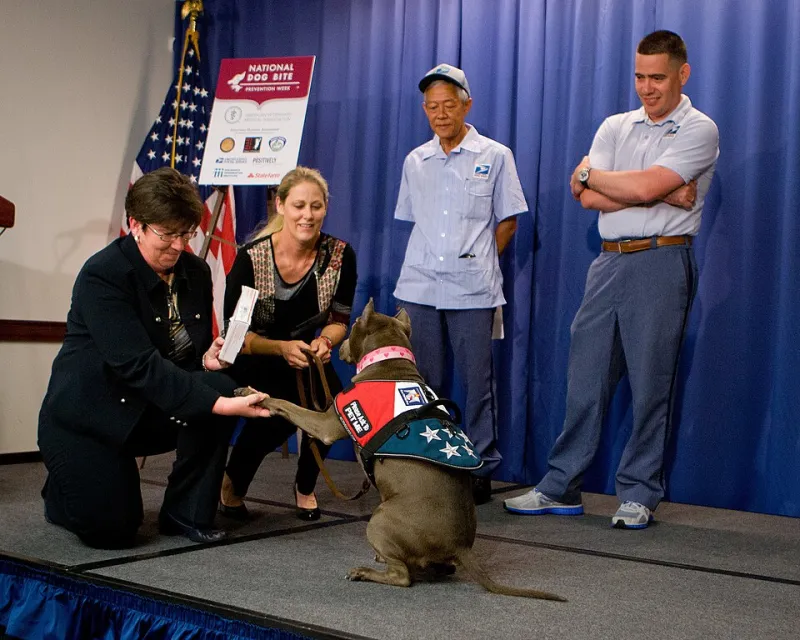
Show up with your dog. Seriously. Nothing changes minds faster than a well-behaved pit bull sitting calmly in a council chamber while a legislator explains why it's inherently dangerous. Visibility matters. So does merit — demonstrated, undeniable, in-person merit.
The Bottom Line
BSL was never really about dogs. It was about fear — and about the political appeal of appearing decisive in the face of it. What we know now, unambiguously, is that these laws don't deliver the safety they promise. They do deliver suffering, expense, and injustice.
The communities getting this right aren't the ones with the longest lists of banned breeds. They're the ones investing in owner education, responsible enforcement of behavior-based standards, and the kind of nuanced policy thinking that treats dogs — and their owners — as individuals rather than stereotypes.
Sound familiar? It should. It's the same thing we've been saying about pit bulls all along.