Resume, Please: What Happens When Dogs Get Interviewed Instead of Judged
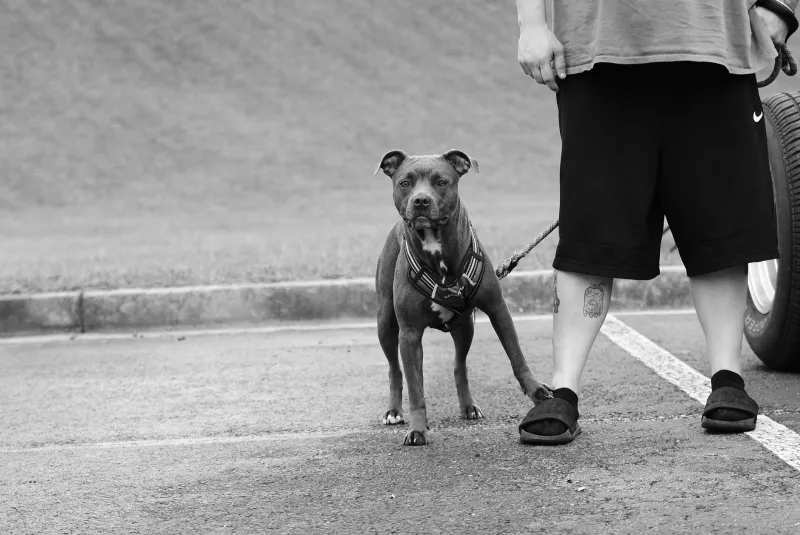
Picture this: a dog walks into a shelter, plops down on the evaluation floor, and slides a folder across the concrete. Inside? A passed Canine Good Citizen test. A therapy certification. Three years of visits to a VA hospital. A clean bill of health and a letter of recommendation from a kindergarten teacher.
Now picture the same dog, same folder, walking into a landlord's office — and getting rejected before anyone opens it, because someone glanced at the top line and saw the words pit bull mix.
We call that the merit gap, and it's the whole reason this foundation exists.
The Interview Nobody's Holding
Here's the thing that drives us a little nuts: we already have the tools to evaluate dogs as individuals. Temperament testing protocols like the ASPCA's Meet Your Match program. The AKC's Canine Good Citizen (CGC) evaluation, which measures everything from reaction to strangers to composure around other dogs. Therapy dog certifications that require dozens of supervised visits before a dog earns its vest.
These assessments are rigorous. They're standardized. They produce actual, comparable data.
And yet, in adoption decisions, rental applications, and insurance underwriting across the country, none of it matters as much as a label. A dog who can sit calmly while a toddler tugs her ears can still be banned from an apartment because of the shape of her head. That's not risk assessment. That's profiling with paperwork.
Meet the Dogs Who'd Get the Job
We don't have to imagine what a merit-based system looks like, because pit bulls are already building the portfolio.
There's the CGC phenomenon. Pit bull-type dogs pass the American Temperament Test Society's evaluation at rates that consistently rival — and often beat — popular family breeds like golden retrievers and beagles. Year after year. The numbers are public. Anyone can look them up. Very few people do.
There's the therapy circuit. From children's reading programs where pit bulls sit patiently while kids sound out words, to hospital visits where a 60-pound 'vicious breed' curls up quietly next to a hospice patient, certified pit bulls are doing the work. Quietly. Shift after shift.
And there's the athletic résumé. Agility trials, dock diving, barn hunt, weight pull — pit bull-type dogs are racking up titles in dog sports across the US, often rescues pulled from municipal shelters just months earlier. You don't earn a blue ribbon on reputation. You earn it on performance, judged in real time, by neutral observers.
Sound like a fair hiring process? It should. Because that's exactly what it is.
Why Evidence Keeps Losing to Vibes
So why does a stack of certifications lose to a breed label?
Because stereotypes are cognitive shortcuts, and shortcuts are comfortable. A landlord who's never met a pit bull can decline one in four seconds flat. Checking a CGC certificate takes effort. Calling a shelter reference takes more. And fear, frankly, is a powerful motivator — even when it's borrowed fear from a headline about a dog three states away who wasn't even the breed the article claimed.
The irony is brutal: the dogs most likely to need an evidence-based evaluation — pit bulls, whose reputations are the most distorted — are the dogs least likely to get one. Shelters often skip formal temperament testing due to resource constraints. Landlords won't look at a certificate they've never heard of. Insurers won't read a file at all; they read a name.
What a Merit-Based World Actually Looks Like
We're not asking for anything radical. We're asking for the same standard we'd apply to anything else worth evaluating: look at the individual.
- Shelters can make temperament data visible — post CGC status, playgroup behavior, and known history right on the kennel card, the way adoption platforms like Adopt-a-Pet increasingly allow.
- Renters can build what we call a pet resume: certifications, vet records, references, training documentation. It works. It's working right now, in apartments across the country.
- Insurers could underwrite based on documented behavior and bite history — actual risk indicators — instead of a breed checkbox that actuaries can't even defend with their own data.
Some shelters have already gone further, removing breed labels entirely and letting the dog's behavior do the talking. The results? Faster adoptions, fewer returns, and a lot of embarrassed assumptions.
The Test We're Really Taking
Here's the uncomfortable part. When we say dogs should be judged on merit, we're really asking people to be judged on their judgment. Can you look at an individual animal — with a name, a history, a stack of evidence — and set aside the story you were told before you walked in?
Every pit bull who passes a temperament test, earns a therapy vest, or takes a ribbon in agility is answering that question for you. The only remaining job is ours: to actually read the resume.
At The Merit Pit Bull Foundation, we think every dog deserves the interview. Because when you finally sit down with the candidate instead of the label, you usually find the same thing we have —
You'd hire her in a heartbeat.