One Growl, Forty Eyes: The Unfair Math of Being Watched at the Dog Park
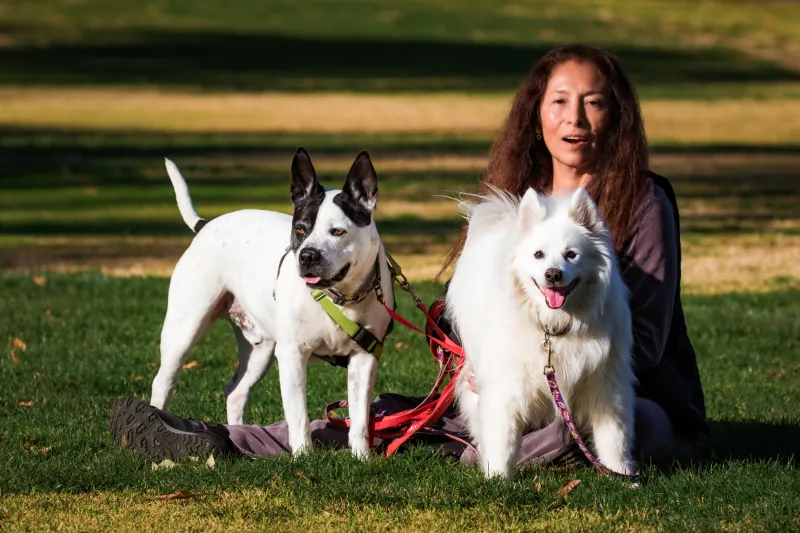
There's a moment every pit bull owner knows by heart. Your dog is mid-game, maybe a little too rowdy with a border collie who started it, and somebody growls. Maybe yours. Maybe theirs. Doesn't matter. Forty pairs of eyes snap to your dog like the whole park just agreed on a verdict.
Here's the thing: growling is communication. Dogs growl at each other roughly a hundred times an afternoon in any off-leash park in America, and most of those moments resolve in seconds with a play bow and a shake-off. But when your dog is a pit bull, the math changes. One growl becomes evidence. One scuffle becomes a headline in the neighborhood group chat. Meanwhile, the Lab who body-slammed a beagle into the fence last Tuesday? Nobody even looked up.
The Microscope Problem
Let's be honest about the double standard. When a golden retriever snaps at another dog, the owners exchange apologies and everyone moves on — 'he's usually so sweet.' When a pit bull does the exact same thing, the incident becomes proof of everything people already believed. Psychologists call it confirmation bias; we call it Tuesday.
This microscope has real consequences. It changes how we handle our dogs. Some of us over-manage — keeping our dogs leashed at all times, avoiding the park entirely, skipping the vet's waiting room. And here's the cruel irony: a dog who never gets to practice normal dog social skills is a dog more likely to be awkward when they finally do. The scrutiny creates the very behavior it fears.
I've talked to owners who drive forty minutes to a trailhead at 6 a.m. just to avoid the neighborhood park. That's not advocacy. That's survival mode. And survival mode doesn't change anyone's mind about our dogs.
What One Bad Moment Actually Means
So your dog had a scuffle. Before the spiral starts, some grounding: dog-dog conflict is normal canine behavior. It happens across every breed, every size, every background. What matters is the intensity, the recovery, and the context. A noisy disagreement where both dogs walk away fine is not the same thing as an attack, and we should be careful — with ourselves and with others — about which one actually happened.
That said, being advocates means we don't get to shrug either. When our dogs are involved, the bar is higher, fair or not. Fairness isn't coming to save us. Strategy might.
The Playbook: When It Happens to You
1. De-escalate first, debate later. Separate the dogs calmly — no grabbing collars mid-fight if you can avoid it; use a barrier, a leash, or a loud interruption. Then check on the other dog and its owner before anything else. Sincerity in the first sixty seconds does more for pit bull PR than a year of social media posts.
2. Own your dog's part, and only their part. If your dog was rude, say so. 'That was my fault, he got overstimulated' costs you nothing and disarms the narrative instantly. If your dog didn't start it, don't accept blame for it — but skip the courtroom speech. Facts, not fury.
3. Document everything. Take photos, note witnesses, jot down what happened while it's fresh. If animal control gets involved or a neighbor starts a petition, a contemporaneous record is worth its weight in gold. This isn't paranoia; it's the same evidence-first mindset that's winning legal battles for owners across the country.
4. Follow up. A quick check-in text to the other owner — 'How's your girl doing today?' — turns an adversary into, sometimes, a person who tells a different story about pit bulls at their next barbecue. That's how minds actually change: one specific dog, one specific person, one specific follow-up.
5. Know when to take a break. If your dog was genuinely overwhelmed, give them a week of decompression walks and one-on-one playdates before returning to the park. That's not retreat. That's responsible ownership, and it's exactly the example we need to be.
The Long Game
Here's what I keep coming back to: we are always on camera, even when there's no camera. Every trip to the vet, every trailhead, every Saturday at the park is a small audition for the whole breed. That's not fair to our dogs, and it's okay to say so out loud. But unfairness doesn't get us out of the responsibility — it just raises the stakes.
So the next time a growl stops the park, remember: the incident is a moment. The response is the story. Handle the moment with grace, back it up with documentation, and follow through like the neighbor you want to be. One growl can undo years of advocacy — but one good recovery can build more goodwill than a hundred perfect afternoons nobody remembers.
Our dogs have spent decades being judged by their worst moments. The best thing we can do is make sure our responses to those moments are better than anyone expects.