Beyond the Bloodline: How a New Breed Standard Is Being Built on Character, Not History
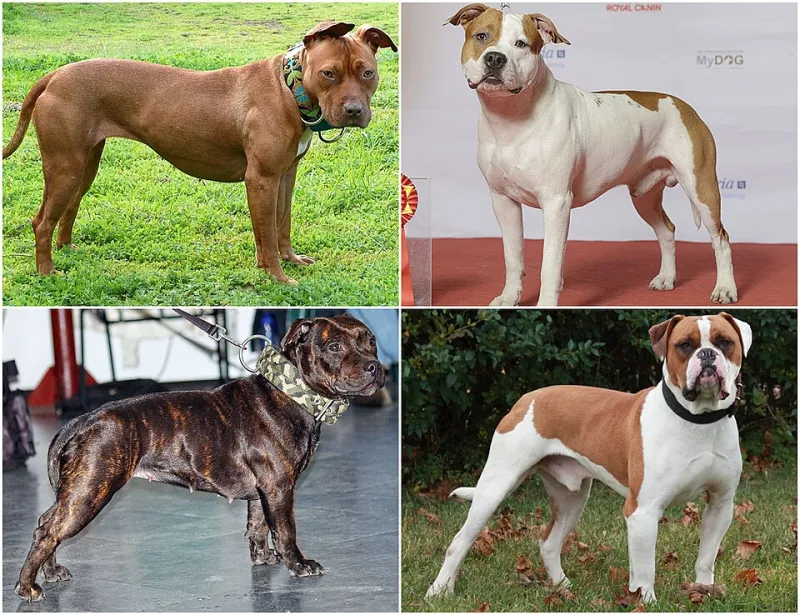
Photo: Adventurous36, CC BY-SA 4.0, via Wikimedia Commons
Ask most people what makes a dog valuable, and you'll get answers rooted in papers, registries, and names that stretch back generations. In some circles, a dog's worth has long been measured by who their great-great-grandparents were. For pit bulls, that logic carried a particularly ugly weight — because for too long, the most "prestigious" bloodlines were the ones closest to the fighting pit.
That's changing. Slowly, deliberately, and with real science behind it, a new generation of breeders, rescue advocates, and canine behavior researchers is dismantling the old hierarchy and replacing it with something better: a merit-based standard that asks not where did this dog come from, but who is this dog right now.
What 'Merit' Actually Looks Like in Practice
The Merit Pit Bull Foundation didn't choose its name by accident. Merit — the idea that a dog should be evaluated on what it demonstrates, not what it's presumed to carry — is the philosophical backbone of responsible pit bull advocacy. And increasingly, it's becoming a practical framework for how some of the most thoughtful breeders and shelters in the country are making decisions.
At its core, merit-based selection means evaluating dogs across three primary dimensions: temperament, physical health, and functional athletic ability. These aren't abstract ideals. They're measurable. They're observable. And they're a far more honest predictor of a dog's suitability as a companion, working animal, or sports competitor than a name on a piece of paper.
Take temperament testing. Organizations like the American Temperament Test Society (ATTS) have been running standardized behavioral evaluations for decades, and pit bulls — when properly socialized and humanely raised — consistently pass at rates that rival or exceed many breeds celebrated for their even-keeled nature. What responsible breeders are now doing is building toward that result deliberately, selecting breeding pairs based on demonstrated behavioral stability rather than lineage prestige.
The Science of Breeding for Character
This isn't just feel-good philosophy. Behavioral genetics is a legitimate and growing field, and researchers have made significant strides in understanding how traits like confidence, sociability, stress tolerance, and impulse control are inherited. Dr. Elinor Karlsson's work at the Broad Institute, along with large-scale citizen science projects like Darwin's Ark, has helped establish that behavior in dogs is shaped by a complex interplay of genetics and environment — and that selective pressure toward specific temperament traits absolutely works over time.
What that means practically is this: when a breeder consistently selects for dogs that are calm in novel environments, friendly with strangers, and resilient under stress, those traits become more reliably expressed in subsequent generations. It's not magic. It's genetics applied with intention and ethics.
Health screening is the other pillar. Hip dysplasia, cardiac conditions, and hereditary eye disorders are real concerns across many breeds, and pit bulls are not exempt. Responsible breeders working within a merit framework use OFA (Orthopedic Foundation for Animals) certifications, cardiac evaluations, and genetic health panels to reduce the likelihood of passing heritable conditions to offspring. This protects individual dogs. It also protects the families who love them.
What Shelters Are Contributing to This Conversation
Here's where the story gets interesting — and where the rescue world is doing something genuinely innovative. Many people assume that "responsible breeding" and "shelter advocacy" exist in opposition. They don't have to.
Shelters across the country are increasingly adopting structured behavioral assessment tools — the SAFER assessment, the Meet Your Match program, and others — that evaluate dogs as individuals rather than as representatives of a breed. What they're building, kennel by kennel, is an enormous real-world dataset on what pit bulls actually look like behaviorally when they're given proper evaluation and care.
Organizations like the ASPCA's Behavioral Sciences team have used this data to push back against the idea that shelter pit bulls are behaviorally unpredictable. In reality, the dogs who struggle in shelter environments often do so because of the environment itself — not because of anything intrinsic to their breed. When those same dogs are moved into foster homes and evaluated in lower-stress conditions, their behavioral profiles often shift dramatically.
That's merit-based thinking in action: assessing what's actually there, not what we assume must be there based on appearance or ancestry.
The Athletes Proving the Point
If you want a living, breathing argument for merit over pedigree, look at the pit bulls currently dominating dog sports across the United States. Dock diving, weight pull, agility, nose work, barn hunt — these disciplines reward actual ability. There are no shortcuts. A dog either has the drive, the athleticism, the focus, and the trainability to compete, or it doesn't.
And pit bulls, selected thoughtfully and trained humanely, are showing up and showing out. Handlers who compete with pit-type dogs in these arenas will tell you the same thing: these dogs are extraordinary athletes who live to work in partnership with a human. That's not a product of fighting-dog heritage. That's a product of selecting for the traits that make dogs genuinely good at collaborative, high-energy tasks.
The breeders producing these competitors are meticulous. They health test. They temperament evaluate. They place dogs in homes and sports programs that match their energy and drive. They're not chasing a name on a pedigree. They're chasing a dog that performs — in the arena and in the living room.
Why This Matters Beyond the Dog World
There's a bigger cultural argument embedded in this shift, and it's worth naming directly. The idea that value is inherited — that worth is determined by lineage, by who came before you — is a framework that causes harm far beyond dog breeding. Challenging it in the context of pit bulls isn't just good for dogs. It's a small, concrete demonstration that evaluation based on demonstrated character is more honest, more fair, and more useful than evaluation based on origin.
A dog raised with care, selected for stability, tested for health, and trained with kindness is a better dog than one born to famous parents and given nothing else. That's not a radical claim. It's just true.
Building the Next Generation
The movement toward merit-based standards in pit bull breeding and rescue is still young. There's no single governing body, no universal certification, no national registry that captures everything happening in this space. What exists is a growing network of people — breeders, rescuers, trainers, veterinarians, and advocates — who share a commitment to evaluating dogs honestly and selecting for what actually matters.
That network is what the Merit Pit Bull Foundation exists to support and amplify. Because changing minds about pit bulls doesn't happen through argument alone. It happens when people meet a dog that defies everything they thought they knew — a dog that is healthy, stable, joyful, and capable. A dog that got there not because of a name in a registry, but because someone along the way decided to do right by the animal in front of them.
That's the standard worth breeding toward. That's the standard worth fighting for.