Out Here, Nobody's Scared: How Rural America Quietly Became Pit Bull Country
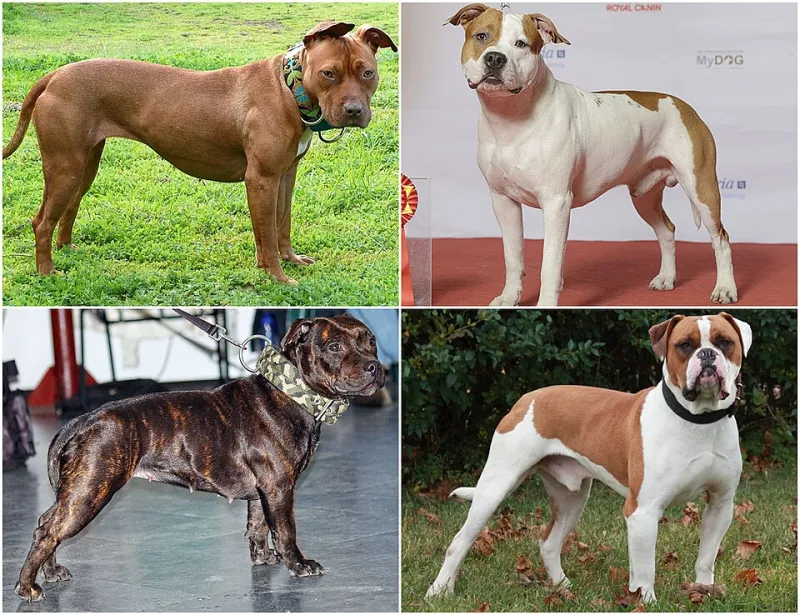
Photo: Various, see description. Compiled by Adventurous36, CC BY-SA 4.0, via Wikimedia Commons
Drive far enough outside any major American city and the conversation about pit bulls changes completely. The breed-panic headlines, the insurance riders, the landlord restrictions — all of it starts to feel like noise from another world. Out in rural counties across the South, the Midwest, and Appalachia, pit bulls aren't a controversy. They're just dogs. Good ones, usually.
That's not a romanticized take. It's what you hear when you actually talk to the people living it.
The Dog That Earns Its Keep
Farm dogs have always been judged by a different standard than their suburban counterparts. They need to be tough enough to work, smart enough to learn, and loyal enough to stick close when things get complicated. In a lot of rural households, pit bulls — or dogs that look a whole lot like them — have quietly become the go-to choice for exactly those reasons.
In rural Tennessee, Alabama, and across the Texas Hill Country, you'll find pit-type dogs patrolling fence lines, keeping predators away from livestock, and doubling as the family's most trusted companion by sundown. These aren't dogs being managed out of fear. They're dogs being used — in the best possible sense — because they're capable, sturdy, and deeply bonded to the people they work alongside.
A cattle rancher in central Oklahoma once put it plainly: "I don't care what a dog looks like. I care if it does its job and comes home at night." That kind of pragmatism cuts right through decades of media-driven hysteria.
What Urban Breed Panic Actually Looks Like From the Outside
Here's the paradox worth sitting with: the communities that have the least formal exposure to pit bulls — dense urban centers, affluent suburbs — tend to produce the loudest calls for breed restrictions. Meanwhile, the communities where pit bulls are genuinely woven into daily life rarely push for bans at all.
That's not a coincidence. It's what happens when policy gets shaped by fear rather than familiarity.
Breed-specific legislation has been fought and, in many cases, repealed across the country. States like Florida, Texas, and Utah have moved to prevent local governments from passing breed bans entirely. And while those battles often play out in city halls and courthouses, the argument against BSL has been lived quietly in rural communities for generations. They just never needed to make it formally because the question never really came up.
When your neighbor's pit bull helps them track a lost calf or alerts the family to a gas leak at 2 a.m., the abstract fear of the breed doesn't have much room to take hold.
Economic Realities Shape Relationships With Animals
There's another layer here that doesn't get enough attention: economic access.
In rural communities, pet ownership often looks different than it does in cities. Veterinary care may require a longer drive. Breed-specific insurance premiums — which can add hundreds of dollars annually to the cost of owning a pit bull — are less likely to be a factor when homeowners insurance itself is structured differently. The financial gatekeeping that makes pit bull ownership harder in urban and suburban environments simply operates differently out here.
That's not to say rural pit bull owners don't face challenges. They do. But some of the bureaucratic and financial friction that urban owners navigate constantly — the apartment breed restrictions, the HOA rules, the vet offices that quietly turn away certain breeds — is less present. And the result is a more normalized, less fraught relationship between people and their dogs.
It's worth asking whether some of what we call "breed controversy" is actually just class and geography wearing a different mask.
Community Bonds That Contradict the Narrative
In small towns, everybody knows everybody's dog. That social accountability changes things. A pit bull that lives on Main Street in a rural county isn't anonymous. It has a name, an owner with a reputation, and neighbors who've watched it grow up. The abstraction that fuels fear — the faceless, dangerous "pit bull" of cable news — doesn't survive contact with a specific animal that your kid has been petting since it was a puppy.
This is something pit bull advocates have understood for a long time: the fastest way to change someone's mind about this breed is to introduce them to an actual dog. Rural communities have been running that experiment at scale for decades without calling it advocacy.
The bond that forms between a farm family and their working pit bull isn't sentimental in the way a city rescue story might be framed. It's practical, mutual, and deep. These dogs protect what matters. They work hard, they're loyal under pressure, and they integrate into family life with a flexibility that makes them genuinely remarkable animals.
What the Rest of America Could Learn
None of this means rural communities have everything figured out. Irresponsible ownership, neglect, and abuse happen everywhere — rural areas included. The difference isn't that rural America has solved the pit bull question. It's that in many of these communities, the question was never asked in the same panicked way to begin with.
There's a lesson in that for advocates, policymakers, and anyone who genuinely wants to improve outcomes for this breed. Familiarity works. Community integration works. Treating dogs as individuals rather than breed proxies works. These aren't radical ideas — they're just things that rural America has been doing without a press release.
At The Merit Pit Bull Foundation, we believe that changing minds happens one dog at a time. But we'd add this: it also happens one community at a time. And some of those communities, far from the headlines and the breed-ban debates, have already done the work.
Maybe it's time the rest of the country caught up.
Want to support pit bull advocacy in your region? Connect with local organizations working on breed education, policy reform, and responsible ownership resources at themeritpitbullfoundation.com.