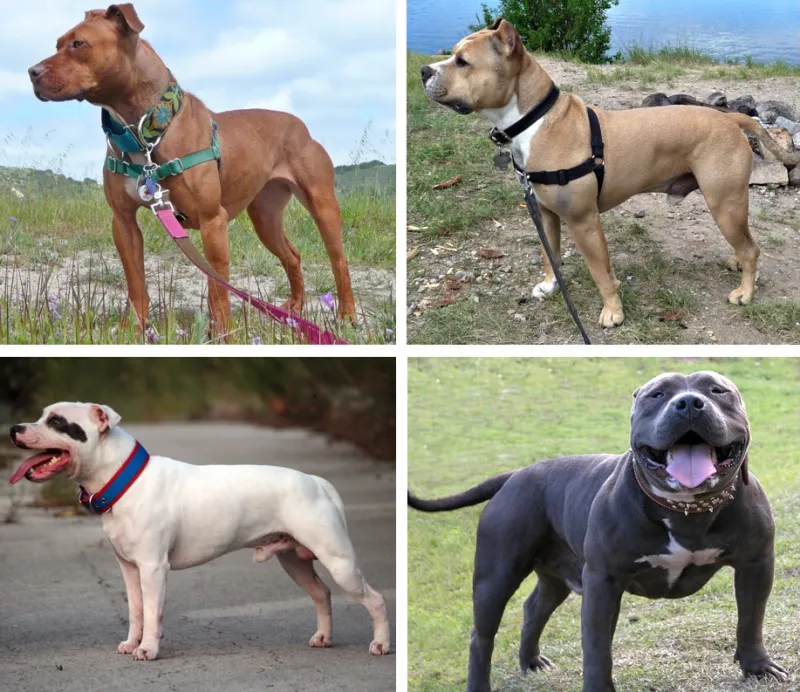
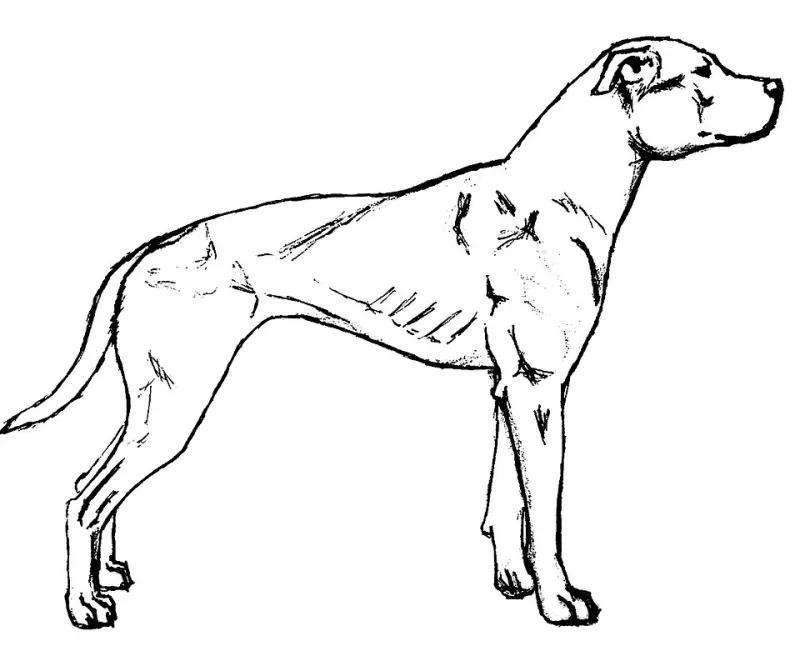
Screened Out: How Over-Cautious Adoption Rules Are Keeping Pit Bulls Caged — and Families Heartbroken
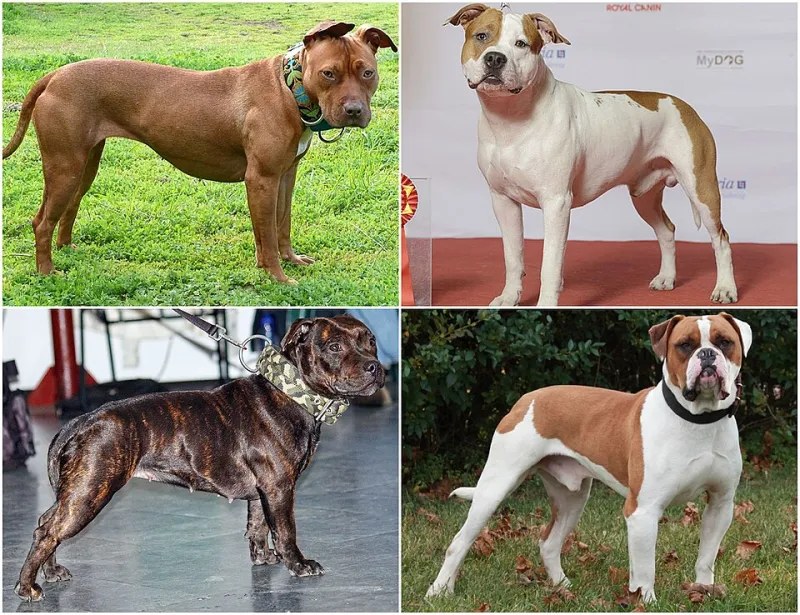
Photo: Various, see description. Compiled by Adventurous36, CC BY-SA 4.0, via Wikimedia Commons
Imagine spending months preparing to adopt a dog. You research breeds, puppy-proof your apartment, consult your vet, and finally submit an application for the blocky-headed, tail-wagging dog you fell in love with at your local shelter. Two weeks later, you get a form email. Denied. No real explanation. Just a polite wall.
This isn't a rare story. It's practically a genre.
Across the country, prospective adopters who pursue pit bulls — or dogs identified as pit bull-type — describe a process that feels less like bringing home a pet and more like applying for a security clearance. Meanwhile, the behavioral science on these dogs keeps pointing in one stubborn direction: they're passing temperament evaluations at some of the highest rates in the shelter system. So what exactly is going on?
The Data Has Been Telling Us Something for Years
The American Temperament Test Society has tracked breed-specific pass rates for decades. Pit bull-type dogs have consistently scored at or above the national average — outperforming many breeds that waltz through adoption processes with zero extra scrutiny. Shelter intake assessments tell a similar story. Dogs labeled as pit bulls routinely score well on stranger interaction, handling tolerance, and stress recovery.
Dr. Miranda Okafor, an applied animal behaviorist who has consulted for municipal shelters in three states, puts it plainly: "When I look at the behavioral data, pit bull-type dogs are not the outliers shelters treat them as. In many categories, they're among the most resilient and socially adaptable dogs we evaluate. The disconnect between what the assessments show and what the adoption policies reflect is genuinely striking."
And yet the policies haven't caught up.
The Rejection Pipeline
Take Marcus and Jenna Tillman of Columbus, Ohio. They spent four months trying to adopt a two-year-old pit bull mix named Cosmo from a regional rescue. They owned their home, had a fenced yard, no young children, and years of prior dog ownership. They were rejected twice — once because Marcus works from home and the rescue worried he'd be "too present," and once because their previous dog had been a different breed.
"We genuinely couldn't figure out what the right answer was," Jenna said. "It felt like the goalposts kept moving. We eventually adopted Cosmo through a different organization that actually talked to us like adults."
Their experience isn't an anomaly. A 2022 survey conducted by the National Canine Research Council found that pit bull adopters reported significantly more screening steps, longer wait times, and higher denial rates than adopters pursuing other medium-to-large breed dogs — even when controlling for living situation and prior experience.
Shelter Directors Are Caught in the Middle
To be fair, most shelter directors aren't villains in this story. Many are operating under pressure from boards, liability concerns, and community politics that have nothing to do with actual dog behavior.
"I'll be honest with you," said one shelter director in the Dallas-Fort Worth area who asked not to be named. "Our stricter protocols for pit bulls came after a single incident years ago that got local media coverage. Since then, our board has been gun-shy. I've tried to revise the policy three times. It's not a science problem — it's a PR problem."
That candor is revealing. The strictest adoption barriers for pit bulls often aren't rooted in behavioral evidence at all. They're rooted in institutional risk aversion, shaped by media narratives and legal exposure. The dogs pay the price.
Adoption counselors describe the internal friction this creates. "I'm sitting across from a perfectly qualified family who clearly loves this dog," said one counselor at a Midwest humane society. "And I'm handing them a denial because they rent instead of own, even though our own assessment says this dog is low-energy and great with strangers. It's demoralizing."
When Gatekeeping Becomes a Self-Fulfilling Prophecy
Here's the cruel irony baked into this system: the longer a dog sits in a shelter, the more its behavior tends to deteriorate. Kennels are stressful environments. Dogs that entered the system well-adjusted can develop anxiety, reactivity, and behavioral quirks the longer they're confined. So when a pit bull is held to an impossibly high adoption standard and sits for months while less-scrutinized dogs cycle through, the shelter may eventually be looking at a dog whose behavioral profile has genuinely worsened — not because of breed, but because of the wait.
The restrictive policy, in other words, can manufacture the very outcome it was designed to prevent.
Animal welfare researchers call this the "kennel stress spiral," and it disproportionately affects dogs who already face the longest average shelter stays. Pit bull-type dogs, by nearly every national measure, stay in shelters longer than any other breed category. Tightening the adoption funnel doesn't protect those dogs. It traps them.
What Evidence-Based Adoption Actually Looks Like
Some organizations are doing this differently — and the results are worth paying attention to.
Best Friends Animal Society, which operates sanctuaries and adoption programs across the US, has moved toward what they describe as "conversation-based" adoption counseling. Instead of a checklist that filters applicants out, they prioritize dialogue — understanding a family's lifestyle, experience, and expectations, then matching accordingly. Their pit bull adoption rates and post-adoption return rates have both improved under this model.
Similar approaches are gaining traction at progressive shelters in cities like Austin, Denver, and Portland. The common thread isn't lowering standards — it's replacing arbitrary barriers with genuine assessment. There's a meaningful difference between asking whether someone has a fenced yard and asking how they plan to exercise a high-energy dog. One is a proxy. The other is a conversation.
"We stopped using fencing as a hard requirement three years ago," said one shelter manager in Austin. "What we found is that the families who were rejected under the old rule were often some of our most committed adopters. They just happened to live in a townhouse."
The Families Who Got Through — and What They Found
For every rejected applicant, there's someone who made it through the process and discovered exactly what the behavioral data already knew. Pit bulls, in the right home, are loyal, trainable, affectionate dogs that form deep bonds with their people.
The Tillmans, who eventually brought Cosmo home, describe him as the most adaptable dog they've ever owned. "He figured out our routines within a week," Marcus said. "He's calm, he's gentle with our nieces, he's everything we hoped for. The system almost kept us from each other."
That phrase lands hard: the system almost kept us from each other. It's not a dramatic overstatement. It's just what happens when policy lags behind evidence, and when institutional caution is applied unevenly based on how a dog looks rather than how it actually behaves.
Time to Close the Gap
The merit of a dog shouldn't be buried under bureaucratic hesitation. If the behavioral assessments say a dog is ready, and a family is genuinely prepared, the job of an adoption system is to make that match — not to find new reasons to block it.
Pit bulls have been doing their part. They're passing the tests. They're showing up soft and social and ready to go home. The question now is whether the institutions that hold their futures will finally trust what the data has been saying all along.
Because at some point, keeping a good dog in a kennel while a good family waits at home isn't caution. It's just a waste.