Likes, Shares, and Second Chances: How a New Generation of Content Creators Is Rewriting the Pit Bull Story Online

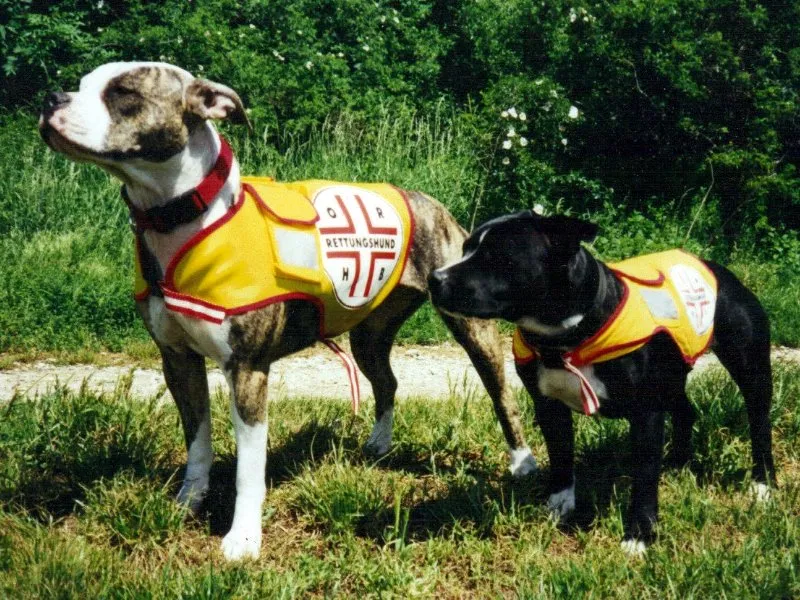
Photo: Harald Krichel, CC BY-SA 4.0, via Wikimedia Commons
For most of the late 20th century, the pit bull's image was built in newsrooms. Sensational headlines, stock photos of bared teeth, breathless local news segments — that was the pipeline. The dogs didn't get to speak for themselves, and neither did the people who loved them.
Then came the phone camera. Then came TikTok.
What's happening right now in the pit bull advocacy space online is genuinely unprecedented, and it's being driven not by nonprofits or lobbyists but by regular people with ring lights, rescue dogs, and a few hundred thousand followers who showed up because they couldn't stop watching a video of a pit bull doing something unbearably sweet.
The Scroll That Changes a Mind
There's a specific kind of content that keeps appearing in pit bull corners of the internet, and it follows a recognizable emotional arc: skepticism, surprise, delight, attachment. A creator introduces their dog — often with a nod to the stereotypes — and then spends the next thirty seconds completely dismantling them through sheer mundane reality. The dog is stealing a pillow. The dog is doing zoomies in the backyard. The dog is asleep on a toddler like a large, snoring blanket.
This format works because it doesn't argue. It doesn't lecture. It just shows.
@merleandme, a TikTok account run by a woman in Nashville with just under 800,000 followers, built her entire following on this premise. Her pit bull Merle has become something of a minor celebrity in the breed advocacy space — not because of any single viral moment, but because of the cumulative effect of watching him exist gently and joyfully across hundreds of videos. "I never set out to be an advocate," she's said in interviews. "I just wanted to document my dog. The advocacy kind of found me when I started reading the comments."
Those comments — thousands of them — are often some version of the same thing: I used to be scared of pit bulls. I don't know when that changed, but it changed.
Why Authentic Beats Polished Every Time
Traditional media advocacy for pit bulls has often been well-intentioned but stiff. Infographics. Press releases. Carefully worded statements about bite statistics. None of it moves people the way a shaky vertical video of a pit bull trying to figure out a sprinkler does.
Creators who have built large pit bull followings are almost uniformly emphatic about one thing: authenticity is non-negotiable. The moment content starts feeling like a PSA, it loses its power.
Tyrese and Tank, a YouTube channel run by a former Army veteran in Georgia, has accumulated over 1.2 million subscribers documenting life with his three pit bulls — two of which are rescues pulled from fighting situations. His videos don't shy away from the hard parts. He's talked openly about Tank's anxiety, about the slow rehabilitation process, about the neighbors who initially complained. That honesty is exactly why people trust him.
"People can smell a sales pitch," he told an interviewer last year. "But they can't fake a dog who climbs into your lap when you're having a bad day. That's just real. And real travels."
This is a point that researchers studying online persuasion have started to validate. A 2022 study from the University of Southern California's Annenberg School found that parasocial relationships — the sense of knowing and trusting a creator — are among the most powerful drivers of attitude change on social platforms. When someone has watched 200 videos of a pit bull named Tank, Tank is not an abstraction. Tank is a specific individual they care about. And that changes everything.
The Viral Moment vs. The Long Game
Not all pit bull content operates on the same timeline. Some creators chase the viral moment — a particularly dramatic rescue, a heartwarming reunion, a dog doing something objectively hilarious — and those moments matter. A single video that cracks a million views can introduce a breed to people who would never have sought out that content on their own.
But the creators with the deepest impact tend to be playing a longer game.
The Blocky Head Chronicles, an Instagram account based out of the Pacific Northwest, posts daily content about a rotating cast of foster pit bulls moving through the creator's home. The account has never had a single post go massively viral, but it has maintained a highly engaged following of around 400,000 people who have watched dozens of dogs move from scared, shutdown shelter animals to bouncy, goofy, adoptable pets. Several followers have driven hours to adopt dogs they first saw on the account. Others have started fostering themselves, directly crediting the account as their inspiration.
That's not a viral moment. That's a movement.
Platform Dynamics and the Algorithm Problem
It would be incomplete to talk about this space without acknowledging the complications. Social media platforms have not always been neutral ground for pit bull content. Instagram in particular has faced criticism for inconsistently removing or suppressing content featuring pit bulls — sometimes flagging it under vague "dangerous animals" policies that creators say are applied unevenly and without clear criteria.
TikTok's algorithm, meanwhile, tends to reward emotional peaks — which can inadvertently favor dramatic rescue content over the quieter, relationship-based videos that arguably do more sustained advocacy work. Creators have had to learn to game systems that weren't designed with their mission in mind.
Despite this, the overall trajectory is unmistakably positive. The sheer volume of pit bull content across platforms — and the engagement it generates — has made it increasingly difficult for mainstream media to rely on the old visual shorthand. When a news outlet runs a stock photo of a snarling dog next to a bite story, they now routinely face immediate, organized pushback from a community that has spent years building a counter-narrative in real time.
What This Means for the Bigger Picture
The creators doing this work aren't replacing formal advocacy. They're not lobbying state legislatures or filing amicus briefs in BSL cases. But they are doing something arguably more foundational: they're changing what people feel before they ever encounter a policy question.
Opinion research consistently shows that personal connection — even parasocial connection — is the single most reliable predictor of positive attitude change toward pit bulls. People who know a pit bull, or feel like they do, support breed-neutral policies at dramatically higher rates than those who don't.
Every account that turns a skeptic into a subscriber is building that foundation. One video at a time, one comment at a time, one "I used to think but now I see" at a time.
The news cycle built the myth. The scroll is dismantling it. And honestly? The dogs are doing most of the heavy lifting.