Wired to Heal: What Science Is Learning From Pit Bulls Who Survived the Worst
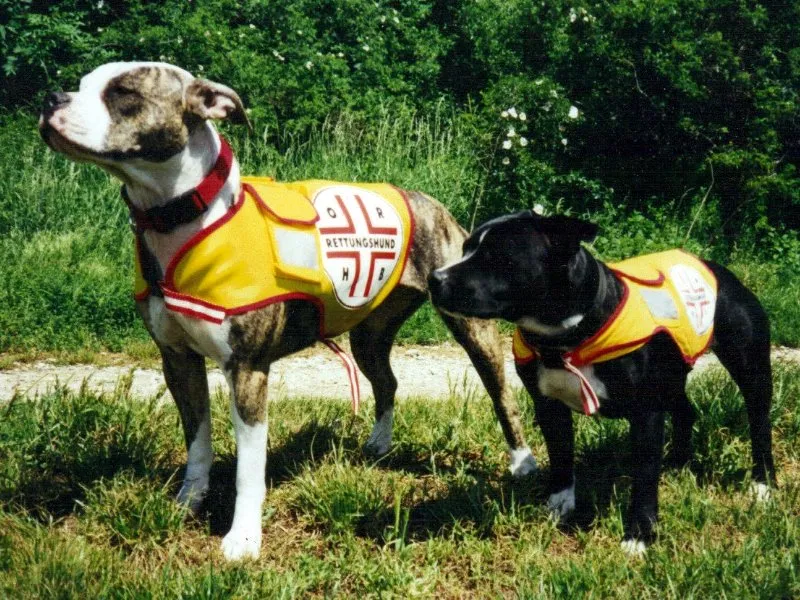
Photo: Markus Pollak (VAK), CC BY-SA 3.0, via Wikimedia Commons
When animal control officers pulled Rosie from a raid on an illegal fighting operation in rural Georgia, she weighed nineteen pounds less than she should have. Her ears were torn. She flinched at hands. She had spent her entire life being conditioned to expect the worst from human beings — and she had the scars to prove it.
Two years later, Rosie was competing in nose work trials in suburban Atlanta, tail wagging, eyes bright, trotting happily beside the woman she'd chosen as her person.
How does that happen? Not just emotionally — but biologically. What is actually going on inside a dog's brain when it crosses that bridge from terror to trust?
The answer, it turns out, has a lot to do with a concept neuroscientists call neuroplasticity — and pit bulls might be some of the most compelling case studies we have.
The Brain Isn't Fixed. Not Even After Trauma.
For a long time, the prevailing assumption was that early trauma leaves permanent marks. And it does — but "permanent" is a lot more flexible than we once believed.
Neuroplasticity is the brain's ability to reorganize itself by forming new neural connections throughout life. It's why stroke survivors can relearn to speak. It's why soldiers with PTSD can, with the right support, build new responses to triggers that once paralyzed them. And it's increasingly understood to operate in our canine companions in ways that closely mirror its function in humans.
Dr. Karen Overall, a veterinary behaviorist whose work has been foundational in understanding canine anxiety and trauma, has long argued that dogs who have experienced chronic stress show measurable changes in brain chemistry — elevated cortisol, disrupted serotonin signaling, hyperactivated fear responses. But she and researchers like her are equally clear that these changes are not a life sentence.
"The brain is not static," says one rescue advocate and certified applied animal behaviorist who has worked with fighting ring survivors for over a decade. "What we see in these dogs is that consistent, positive experience literally rewires the stress response system. It takes time. It takes patience. But the capacity is there."
What Fighting Does to a Dog's Nervous System
To understand recovery, you have to understand what these dogs are recovering from.
Dogs used in fighting operations aren't just physically abused — they're subjected to a sustained psychological environment designed to keep them in a state of chronic hyperarousal. They're often isolated, chained, and exposed to unpredictable pain and fear. This kind of prolonged stress floods the body with cortisol and adrenaline, essentially keeping the nervous system stuck in fight-or-flight mode.
Over time, the amygdala — the brain's alarm center — becomes hypersensitive. Normal stimuli start to register as threats. The prefrontal cortex, which in both dogs and humans helps regulate emotional responses and make sense of context, gets overridden. The dog isn't being "aggressive" or "dangerous" in any meaningful behavioral sense — it's a nervous system doing exactly what nervous systems do when they've been taught that the world is dangerous.
Here's what's remarkable: that same adaptability that allowed the brain to wire itself for survival in a brutal environment is the same adaptability that allows it to rewire for safety in a good one.
Rosie's Road — and What It Looked Like in Practice
Rosie's foster mom, a retired schoolteacher named Deborah, didn't know anything about neuroplasticity when she brought Rosie home. What she knew was that sudden movements sent the dog scrambling under the bed, and that food — specifically, small pieces of cheese — was the first thing Rosie ever took from her hand.
"We started with just that," Deborah says. "I'd sit on the floor, not looking at her, and just hold out a piece of cheese. Some days she'd come get it. Some days she wouldn't. But every time she did, I could see something shift a little."
What Deborah was doing, intuitively, was facilitating a process behaviorists call counter-conditioning — pairing something that triggered fear (a human hand) with something positive (food) until the brain begins to update its prediction. New associations form. New neural pathways develop. Slowly, the threat signal attached to human proximity starts to quiet.
It took eight months before Rosie slept on the bed. It took fourteen months before she approached strangers without hesitation. And it took exactly one nose work class for her to discover what she was made of.
The Pit Bull Factor: Why This Breed Keeps Surprising Researchers
Here's the part that keeps coming up in conversations with rescue professionals: pit bulls, as a group, show a striking capacity for rehabilitation that even experienced behaviorists find notable.
Some of that may be selection pressure — these are dogs who were historically bred to be biddable toward humans even under extreme stress. Dogfighting operations, as horrific as they are, actually selected against human-directed aggression, because handlers needed to be able to handle the dogs. What that means, counterintuitively, is that many fighting ring survivors arrive with a baseline of human-orientation that gives recovery something to work with.
But rescue advocates are quick to add something else: these dogs are often extraordinarily motivated to connect. They want to figure out what you want. They want to get it right. That drive, that eagerness — it's not just endearing. It's neurologically significant. Positive social interaction triggers oxytocin release and activates reward circuits in the brain. Every good moment is, quite literally, building new architecture.
What This Means for How We Talk About These Dogs
The narrative that abused pit bulls are broken, unpredictable, or beyond help isn't just wrong — it's scientifically outdated. And it has real consequences. It influences shelter euthanasia decisions. It shapes public policy. It convinces potential adopters to walk past kennels without stopping.
The dogs we've written off don't know they've been written off. Rosie didn't know she was a lost cause. She just knew that one day, a woman sat on a kitchen floor and held out a piece of cheese.
The brain is not fixed. The science keeps telling us that. Maybe it's time our assumptions caught up.
If you're interested in supporting pit bull rescue and rehabilitation, visit themeritpitbullfoundation.com to learn how you can get involved.