Leashes, Lanes, and Second Chances: Rescued Pit Bulls Are Taking the Dog Sports World by Storm
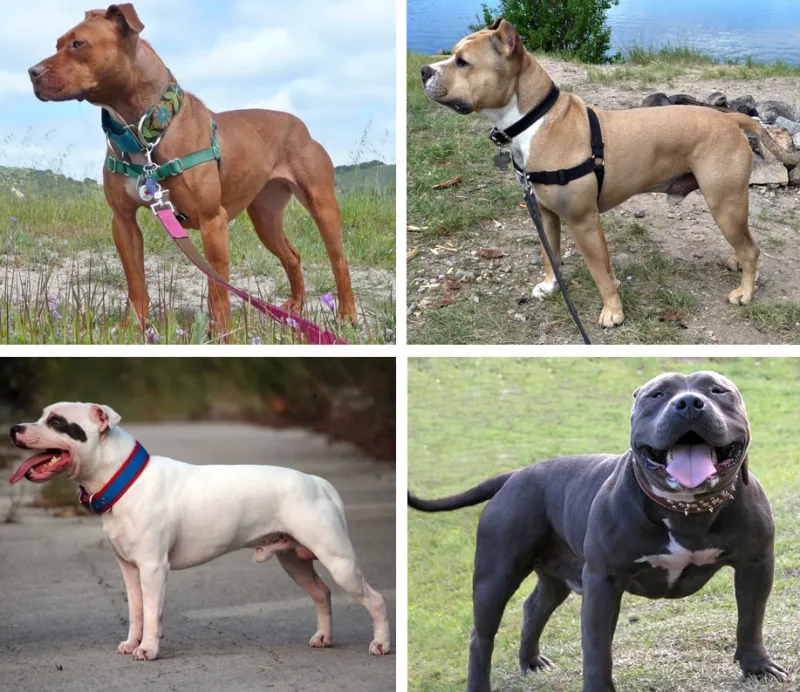
Photo: Various, see description. Compiled by JackMtnSun, CC BY-SA 3.0, via Wikimedia Commons
There's a moment in every agility run when the dog and handler lock eyes before the first obstacle. For a fraction of a second, everything else disappears — the crowd, the clock, the noise. It's just trust. Pure, earned, undeniable trust.
For handlers like Marisol Vega of Austin, Texas, that moment hits differently when the dog on the other end of that gaze is a pit bull named Copper — a dog who, two years before his first competition, was seized from a neglect situation in rural Texas with matted fur and a body score so low his ribs were visible through his skin.
Today, Copper holds two AKC agility titles. He's also, by Marisol's account, the most enthusiastic dog she's ever trained.
"People watch him run and they can't believe it," she says. "They ask what breed he is, and when I tell them, half of them go quiet. The other half want to meet him immediately. Either way, something shifts."
That shift — that quiet recalibration of assumptions — is exactly what The Merit Pit Bull Foundation is built around. And dog sports, it turns out, are one of the most effective arenas for making it happen.
From Worst-Case Scenarios to the Winner's Circle
The pipeline from abuse or neglect to competitive sport sounds unlikely. But rescue organizations and trainers across the country are watching it happen with increasing regularity, and the pattern is hard to ignore.
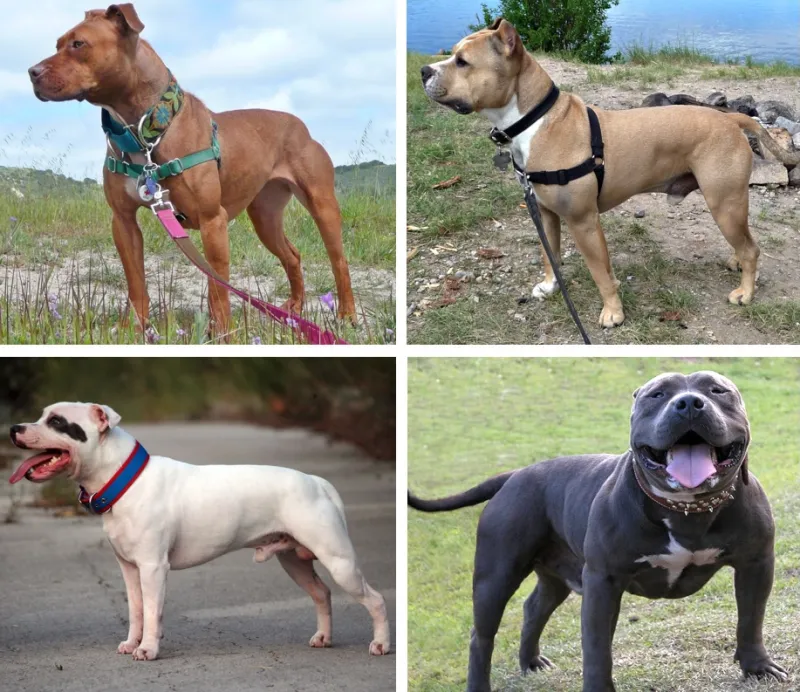
Pit bulls — a term broadly applied to several related breeds including American Pit Bull Terriers, American Staffordshire Terriers, and Staffordshire Bull Terriers — were historically bred for physical stamina, problem-solving, and an intense desire to work alongside humans. Those traits don't disappear because a dog has been mistreated. In many cases, they're just waiting for the right environment to emerge.
That's what trainers like Deja Simmons of Atlanta discovered when she began working with dogs pulled from a cruelty case in 2021. "These dogs had been through something awful," she says. "But they were still so eager to engage. Give them a job, give them consistency, and they light up."
Two of the dogs from that case have since earned titles in AKC-sanctioned obedience competitions. One — a brindle female named Rosie — recently qualified for a regional dock diving event, where she promptly launched herself 18 feet into the water on her first official attempt.
The crowd, Deja notes, went absolutely wild.
Why Dog Sports Work So Well for This Breed
It's not a coincidence that pit bulls tend to thrive in structured athletic environments. The same qualities that make them challenging for underprepared owners — high energy, tenacity, intelligence, a deep need for mental stimulation — make them exceptional sporting dogs when channeled properly.
Agility, in particular, rewards dogs who are fast, responsive, and genuinely love working with their person. Dock diving plays to natural athleticism and drive. Obedience and rally competitions highlight trainability and focus. Pit bulls, when given the foundation they need, check every one of those boxes.
And crucially, these events are public. They happen in parks and fairgrounds and convention centers. Spectators wander in not knowing what to expect, and they leave having watched a dog they assumed was dangerous earn a blue ribbon while wagging its tail so hard it could power a small appliance.
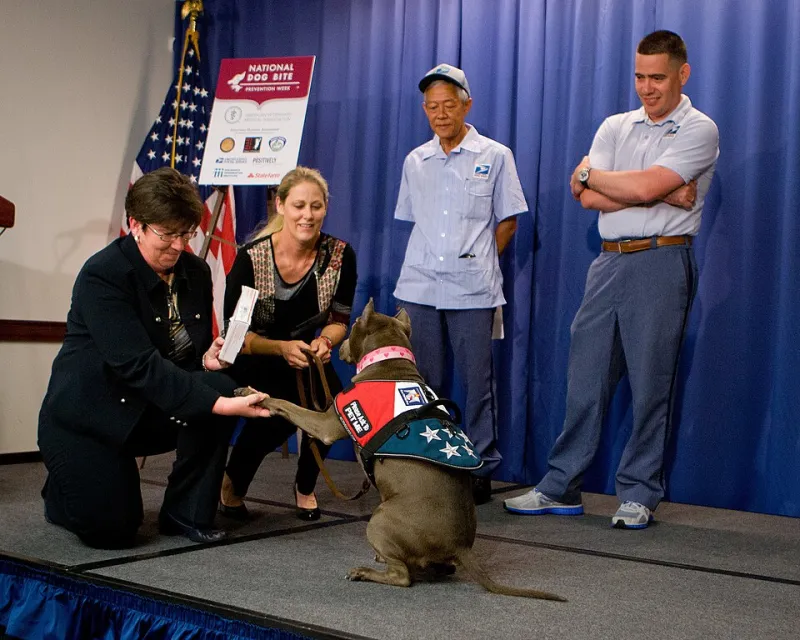
That kind of visibility matters enormously. It's one thing to read a statistic. It's another to watch Copper the rescue pit bull nail a weave pole sequence and then trot back to his handler for a celebratory ear scratch.
The Handlers Behind the Headlines
None of this happens without people willing to put in serious work. The handlers who take on rescued pit bulls and guide them toward athletic competition are, in many ways, advocates first and competitors second.
Marcus Bell of Chicago started competing in AKC rally with his pit bull mix, Duke, partly because he was tired of the looks he got walking the dog in his neighborhood. "I wanted people to see what Duke actually was," Marcus explains. "Not what they assumed."
Duke, who came from a Chicago-area shelter where he'd been passed over repeatedly due to his breed, now has three rally titles and a small but devoted fan base at local competitions. Marcus gets stopped regularly by people who want to talk about him — sometimes by people who used to cross the street to avoid them.
"That's the whole point," Marcus says. "Duke doesn't know he's changing minds. He's just out here having the time of his life. But that's what does it."
What the Ribbons Actually Represent
Every title a rescued pit bull earns is, in a very real sense, a rebuttal. A rebuttal to the idea that these dogs are beyond saving, beyond trusting, beyond loving. A rebuttal to legislation that bans them by breed rather than by behavior. A rebuttal to the cultural shorthand that treats them as symbols of danger rather than what they actually are: dogs.
The Merit Pit Bull Foundation believes that merit — actual, demonstrated, measurable merit — is the most powerful argument we have. Not sentiment. Not anecdote alone. Merit.
And right now, pit bulls are earning it in agility rings and on dock diving platforms and in obedience trials from California to the Carolinas. One run, one jump, one perfectly executed sit-stay at a time.
Copper is already training for his next title. Rosie is eyeing a longer dock. Duke is, by all accounts, absolutely insufferable about how good he is at rally — in the best possible way.
They don't know they're making history. They're just doing what dogs do when someone finally gives them the chance: showing up, working hard, and asking for nothing more than a good scratch behind the ears when it's over.
We think that's worth celebrating. Loudly, and as often as possible.