The Numbers Don't Lie: Pit Bulls Are Passing Temperament Tests at Rates That Should Change Everything
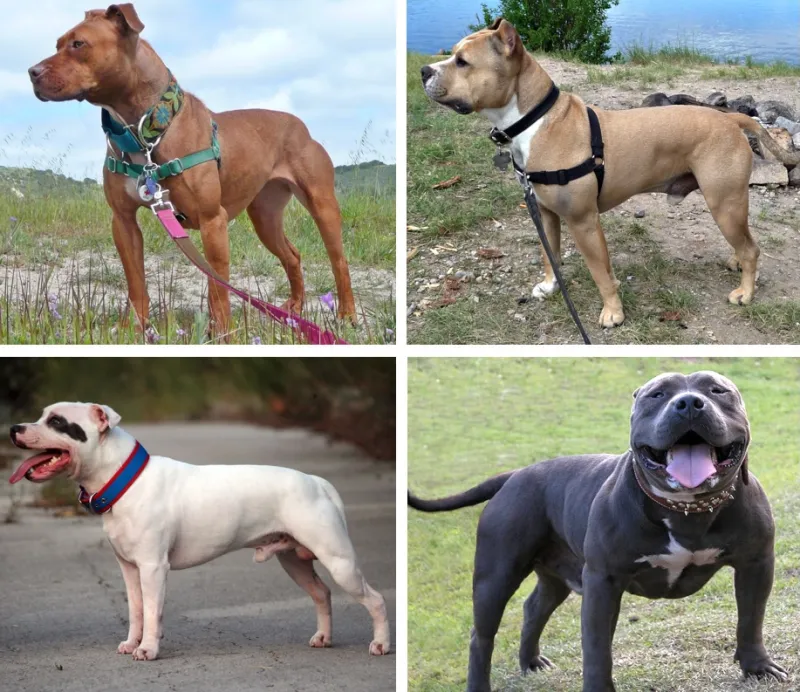
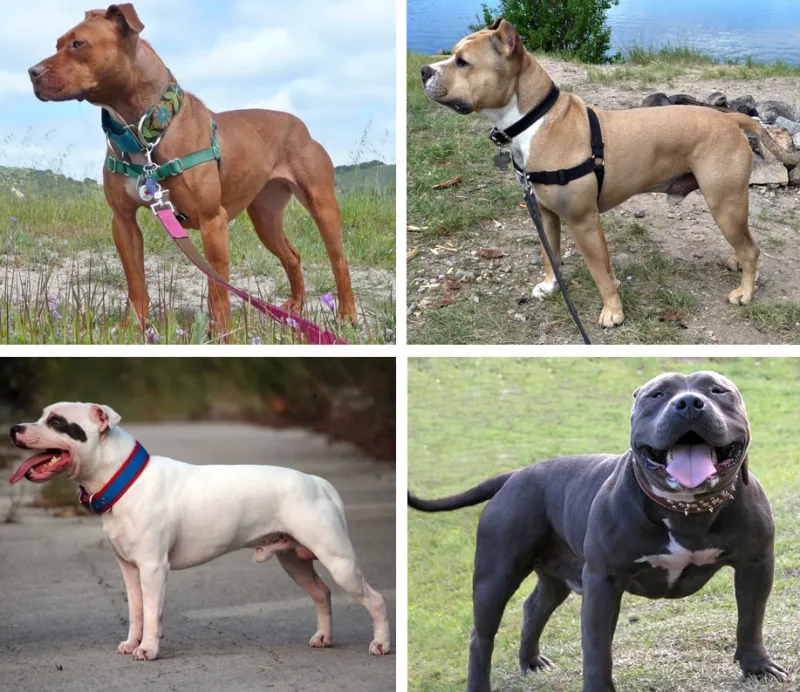
Photo: Various, see description. Compiled by JackMtnSun, CC BY-SA 3.0, via Wikimedia Commons
Let's start with a number: 87.4%.
That's the pass rate for American Pit Bull Terriers on the American Temperament Test Society's standardized behavioral evaluation — one of the most widely referenced canine temperament assessments in the country. For context, Golden Retrievers pass at 85.6%. Beagles come in at 80.3%. Collies — the breed Lassie made synonymous with wholesome American dog ownership — pass at 80.6%.
Read those numbers again. The dog that gets banned by city ordinances, denied by landlords, and feared by strangers on sidewalks is outperforming the dog from the family movie in a standardized behavioral test.
Something doesn't add up. And at The Merit Pit Bull Foundation, we think it's worth figuring out why.
What the ATTS Test Actually Measures
The American Temperament Test Society has been evaluating dogs since 1977. Their test isn't a simple sit-and-shake routine. It's a structured, multi-scenario evaluation that walks dogs through a series of real-world situations designed to assess stability, shyness, aggressiveness, and friendliness, as well as a dog's instinct to protect its handler when genuinely threatened.
Dogs are walked through neutral environments, exposed to sudden sounds and visual stimuli, approached by strangers with varying energy levels, and assessed for how they respond to ambiguous situations. The evaluators are looking for a dog that is neither unpredictably reactive nor so shut down it can't function. They want, in short, a balanced dog.
Pit bulls, as a group, tend to produce balanced dogs. The data says so. Repeatedly.
Yet that data rarely makes it into the conversations that matter most — the city council meetings where breed-specific legislation gets debated, the insurance company boardrooms where coverage decisions get made, the news segments where pit bull stories almost always involve a negative incident rather than an 87.4% pass rate.
The Gap Between Data and Perception
So why does the gap exist? Why do so many Americans carry a mental image of pit bulls as inherently dangerous animals when the behavioral science points in such a different direction?
A few forces are at work here, and none of them are simple.
First, there's media coverage. Studies on dog bite reporting have consistently found that incidents involving pit bulls — or dogs identified as pit bulls, which is itself a notoriously unreliable process — receive significantly more coverage than bites from other breeds. A 2018 study published in the journal Injury Epidemiology found that pit bull-related bites were 2.6 times more likely to be covered by news outlets than bites from other dogs, regardless of severity. Repetition creates familiarity, and familiarity gets mistaken for truth.
Second, there's the breed identification problem. Visual breed identification, even by trained professionals, is wildly inaccurate. Research from the University of Florida and other institutions has shown that shelter workers and veterinarians misidentify mixed-breed dogs' primary breed the majority of the time. A dog that gets labeled a pit bull in a bite report may have little to no pit bull ancestry. But the label sticks, and the statistics follow.
Third — and this one's important — there's the owner responsibility variable that almost never gets discussed proportionally.
Breed Predisposition vs. Owner Influence
Here's what the research is actually pretty clear on: a dog's behavior is shaped by a combination of genetics, early socialization, training, and environment. Breed contributes to behavioral tendencies — energy level, prey drive, how a dog responds to other animals — but it is not a reliable predictor of aggression toward humans.
The CDC has explicitly stated that breed is not a reliable indicator of individual dog behavior and has recommended against breed-specific legislation on those grounds. The American Veterinary Medical Association, the National Canine Research Council, and the American Veterinary Society of Animal Behavior have all landed in the same place: targeting breeds doesn't make communities safer, because it misidentifies the actual risk factors.
Those risk factors? Lack of socialization. Chaining or isolation. Abuse or neglect. Owners who specifically select and train dogs for aggressive behavior. These are the variables that produce dangerous dogs — and they can produce dangerous dogs of any breed.
Pit bulls, because they've historically attracted a subset of irresponsible owners who exploited their loyalty and physical capability, have paid a disproportionate price for human failure. The breed absorbs blame that more accurately belongs elsewhere.
What Happens When Policy Follows Evidence
Some cities and states are already figuring this out, and the results are instructive.
Calgary, Canada — not a US city, but a frequently cited model — replaced breed-specific legislation with a comprehensive responsible ownership program that included mandatory licensing, leash laws, and meaningful consequences for owners of any dog that caused harm. Dog bites dropped dramatically. The city became a case study in what evidence-based animal policy actually looks like.
In the United States, states including California, Texas, and Illinois have passed laws restricting or prohibiting breed-specific legislation at the municipal level. Colorado recently reversed decades of breed bans. Each of these shifts happened, in part, because advocates brought data to the table — temperament test results, bite statistic analyses, studies on the ineffectiveness of breed bans — and made the evidence impossible to ignore.
That's the work. It's not glamorous, but it moves the needle.
Merit Is the Argument
At The Merit Pit Bull Foundation, we come back to this word constantly: merit. Not sentiment. Not "but my pit bull is so sweet." Merit — demonstrated, documented, measurable.
The ATTS data is merit. The peer-reviewed research on breed-specific legislation's ineffectiveness is merit. The CDC's position is merit. The growing body of evidence that owner behavior and environment drive dog behavior far more reliably than breed is merit.
Pit bulls have been earning high marks on behavioral evaluations for decades. They've been doing it quietly, without a publicist, while the narrative about them ran in the opposite direction.
It's time the data got as much airtime as the fear.
Because 87.4% isn't a footnote. It's the whole argument.