Your Zip Code Shouldn't Determine Your Dog's Worth: The Truth About Breed-Based Insurance Discrimination

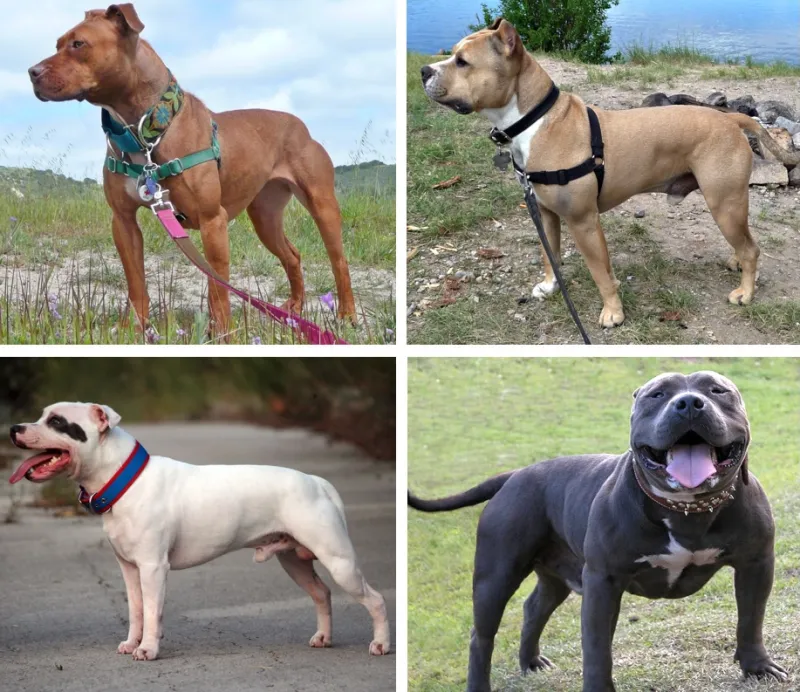
Photo: Stacy, CC BY 2.0, via Wikimedia Commons
Imagine doing everything right. You adopted responsibly, enrolled in obedience classes, socialize your dog regularly, and have never had a single incident on your property. Then your homeowner's insurance renewal arrives — and your coverage has been canceled because of what your dog looks like.
This is the reality for hundreds of thousands of pit bull owners across the United States every single year. And here's the part that should make everyone angry: the data insurers are using to justify these decisions doesn't hold up.
What the Actual Risk Data Says
Breed-specific exclusions in homeowner and renter's insurance policies have become one of the most stubborn examples of policy lagging far behind science. A growing body of research — including studies published in peer-reviewed veterinary and public health journals — consistently finds that breed is a poor predictor of bite risk or liability claims. Individual dog behavior is shaped far more reliably by owner history, training, socialization, and living conditions than by genetics.
The American Veterinary Medical Association has explicitly stated that breed alone is not a reliable indicator of individual dog behavior. The Centers for Disease Control and Prevention reached similar conclusions in their own bite-related research and have cautioned against breed-specific policies as an effective risk management tool. Even actuarial researchers who've dug into homeowner claim histories have found no statistically meaningful correlation between breed labels and the frequency or severity of liability payouts.
So why are insurers still doing this? The short answer: it's easier and cheaper to draw a bright-line rule than to assess individual animals. Underwriting based on breed requires no home visits, no behavioral evaluations, no nuanced judgment calls. It's a blunt instrument masquerading as risk management.
The Real Cost to Real Families
The economic fallout from these policies hits working-class and middle-income families the hardest. When a major insurer drops a household over a dog's breed, owners are often pushed into the surplus lines market — specialty coverage that can cost two to three times what standard homeowner's insurance runs. For renters, the situation is frequently worse: landlords who require proof of insurance as a lease condition can effectively force residents to choose between their home and their pet.
This dynamic disproportionately affects communities of color, where pit bulls have historically been popular family dogs and where housing instability already creates precarious conditions. Breed-based insurance exclusions don't just inconvenience people — they can trigger evictions, foreclose on homeownership, and separate families from pets they love.
There's also a downstream effect on shelters. When owners can't find affordable coverage, surrender rates climb. The dogs who pay the heaviest price for discriminatory underwriting are often the ones who end up back in the system through no fault of their own.
The Companies Getting It Right
Not every insurer is stuck in the past. A growing number of companies have quietly dropped breed restrictions from their underwriting guidelines — and they're not reporting the catastrophic claim increases their competitors might have predicted.
State Farm, one of the largest homeowner's insurers in the country, has long maintained that it does not deny coverage based solely on dog breed and evaluates claims on a case-by-case basis. Companies like Embrace Pet Insurance and Healthy Paws have built their models around individual pet health history rather than breed stereotypes. On the homeowner's side, insurers including Amica and USAA have generally taken more nuanced approaches than the industry average.
Some newer insurtech companies have gone further, explicitly marketing breed-neutral policies as a feature. They're betting — correctly, based on available data — that responsible owners of any breed are good long-term customers.
What You Can Do Right Now
If you're a pit bull owner navigating this system, you're not powerless. Here's where to start:
Shop aggressively. Not all insurers are the same. Call multiple companies and ask directly about breed restrictions before disclosing your dog's breed. Get quotes from independent brokers who can access multiple carriers simultaneously.
Document everything. Canine Good Citizen certification from the American Kennel Club, training records, veterinary history, and behavioral evaluations all create a paper trail that demonstrates your dog's individual temperament. Some insurers will factor this in.
Know your state's laws. Several states — including Michigan, Pennsylvania, and New York — have passed or are actively pursuing legislation limiting the ability of insurers to deny coverage based solely on breed. Check where your state stands and contact your state insurance commissioner's office if you believe you've been unfairly denied.
Push back formally. If you're denied coverage, request the specific underwriting criteria in writing. Filing a complaint with your state's Department of Insurance creates a paper trail and contributes to the regulatory data that advocates use to push for reform.
Connect with advocacy organizations. Groups like the National Canine Research Council and Best Friends Animal Society track insurance discrimination and can connect you with legal resources and legislative campaigns in your state.
The Legislative Frontier
State-level insurance reform is one of the most promising — and underutilized — tools in the pit bull advocacy toolkit. When legislators hear directly from constituents who've faced coverage denial, it moves the needle in ways that abstract data arguments often don't.
Several state legislatures have introduced bills in recent sessions that would prohibit insurers from using breed as the sole basis for denial or surcharge. These efforts need constituent support to cross the finish line. Showing up to committee hearings, submitting written testimony, and meeting with your state representative's office are all concrete actions that have real impact.
At the federal level, advocates have pushed for language in housing and consumer protection frameworks that would address breed discrimination in rental markets specifically — an area where the harm is particularly acute and federal fair housing principles could potentially apply.
Changing the Equation
The insurance industry runs on risk models. Right now, many of those models are built on fear and outdated assumptions rather than actual claims experience. The path to changing them runs through data, legislation, and sustained pressure from the millions of American households that own and love these dogs.
Every complaint filed, every legislative hearing attended, every insurer that gets an earful from a responsible owner is a small piece of a larger shift. The science is already on our side. The job now is making sure the policies catch up.