Seven Days on a Leash: A Week in the Life of Three American Pit Bull Households
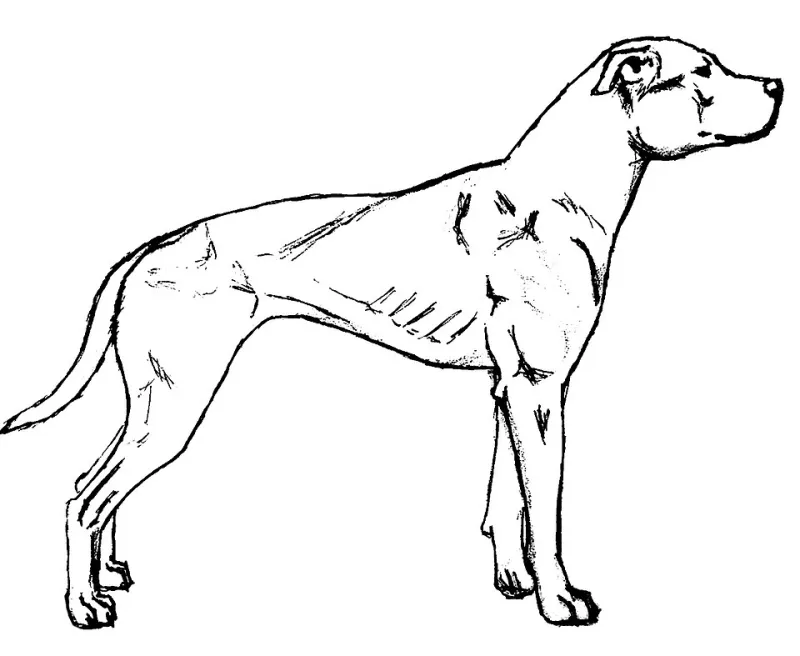
Photo: Adventurous36, CC BY-SA 4.0, via Wikimedia Commons
Here's a request we hear a lot at The Merit Pit Bull Foundation: show me the data. And we love the data. Temperament test scores, shelter intake numbers, insurance actuarial tables — we've covered all of it.
But data doesn't change minds at a backyard barbecue. Stories do. So we asked three pit bull households in three different states to let us tag along for one full week. No cameras, no staged photo ops. Just real life, leash and all.
Monday: Room 12, Attendance, and a Dog Named Biscuit
Dana Whitfield teaches third grade in Dayton, Ohio, and her five-year-old pit bull mix, Biscuit, has a job most dogs would envy: classroom greeter every other Friday.
On Mondays, though, it's simpler. The week starts the way it starts for millions of American dog owners — a 6 a.m. walk around the block, Biscuit's tail metronoming at every squirrel, and a thermos of coffee balanced in the other hand.
"The parents used to cross the street," Dana told us, laughing. "Now the same parents ask if Biscuit can come to the end-of-year picnic. He's basically on the PTA."
That shift didn't happen through a debate. It happened through repetition. Biscuit showing up, week after week, being exactly what he is: a dog who naps through spelling tests and loses his mind over string cheese.
Wednesday: The Barbershop Chair and the Dog Under It
Marcus Reyes runs a barbershop in Mesa, Arizona, and his two-year-old pit bull, Luna, has claimed the corner spot by the waiting chairs as her office. Clients come for a fade and end up on the floor scratching her ears.
"I've had guys come in who told me straight up they were scared of pits," Marcus says, trimming a fade while Luna supervises. "Two hours later they're asking me where to adopt one. I didn't argue with anybody. She did the work."
Midweek for Marcus and Luna looks like this: a 5:30 a.m. run, breakfast, then the shop. Lunch is a walk to the taco spot two doors down, where the owner keeps a jar of dog biscuits behind the counter. By closing, Luna has greeted roughly forty people and hasn't met a single one she didn't like.
The stereotype of the pit bull owner as an outlier, a curiosity, a warning sign? Marcus is a small business owner who sponsors the local Little League team. Luna is the unofficial mascot.
Saturday: Little League, Lawn Chairs, and a Veteran's Best Friend
Trey Alvarado served two tours in the Army before coming home to Knoxville, Tennessee, where he adopted Cooper from a shelter that was full to bursting with pit bull mixes — a story we've told before about our nation's shelters.
Saturday means baseball. Trey's nephew plays in the local league, and Cooper has become a fixture on the sidelines, sprawled under a lawn chair while families mill around him. Kids ask before they pet. Cooper, a consummate professional, accepts payment in belly rubs.
"People ask me if he's a service dog," Trey says. "He's not. He's just my dog. But I'll tell you this — there were some rough nights when I got back, and he was there for every one of them. That's not a certification. That's just a dog who shows up."
Trey's week also includes a volunteer shift at the same shelter where he found Cooper, walking dogs who've been waiting too long. He knows the math: pit bulls and pit mixes make up the largest share of shelter populations in America and, too often, the longest stays.
The Common Thread Isn't the Dog
Here's what struck us most after a week with three very different households: the dogs were almost beside the point. Biscuit, Luna, and Cooper weren't performing advocacy. They were just living their lives — going to work, going to the game, going to the taco stand.
And that's exactly the point. The myth of the pit bull and the myth of the pit bull owner both fall apart under the weight of the mundane. A teacher. A barber. A veteran. A dog asleep under a lawn chair in the Tennessee sun.
You can't argue someone out of a stereotype with a spreadsheet. But you can invite them to sit on the patio while your dog snores at their feet. Changing minds, one dog at a time — sometimes it really is that slow, and that simple.
If you want to be part of that kind of quiet advocacy, you don't need a platform. You need a leash, a little patience, and a Saturday afternoon.